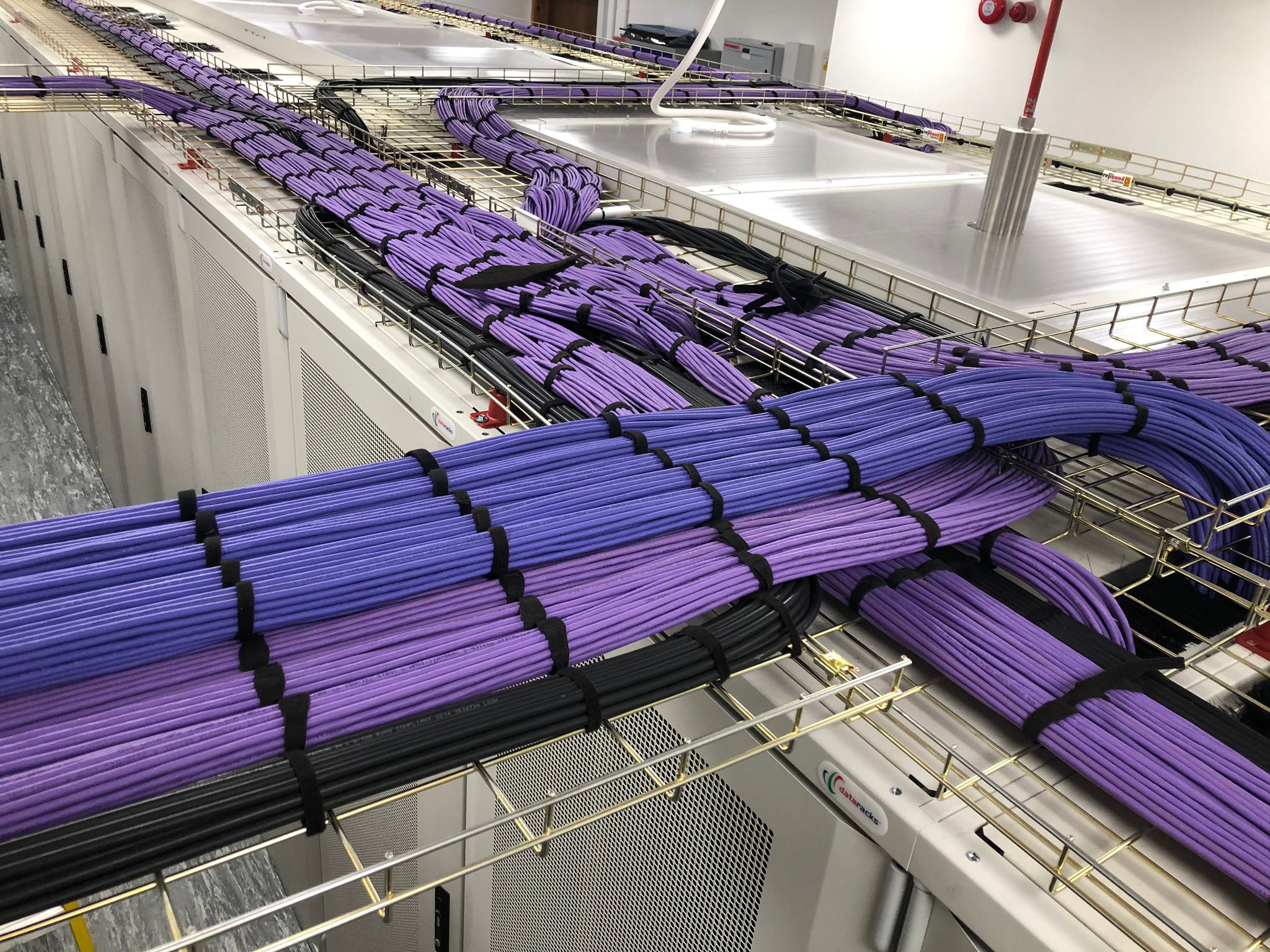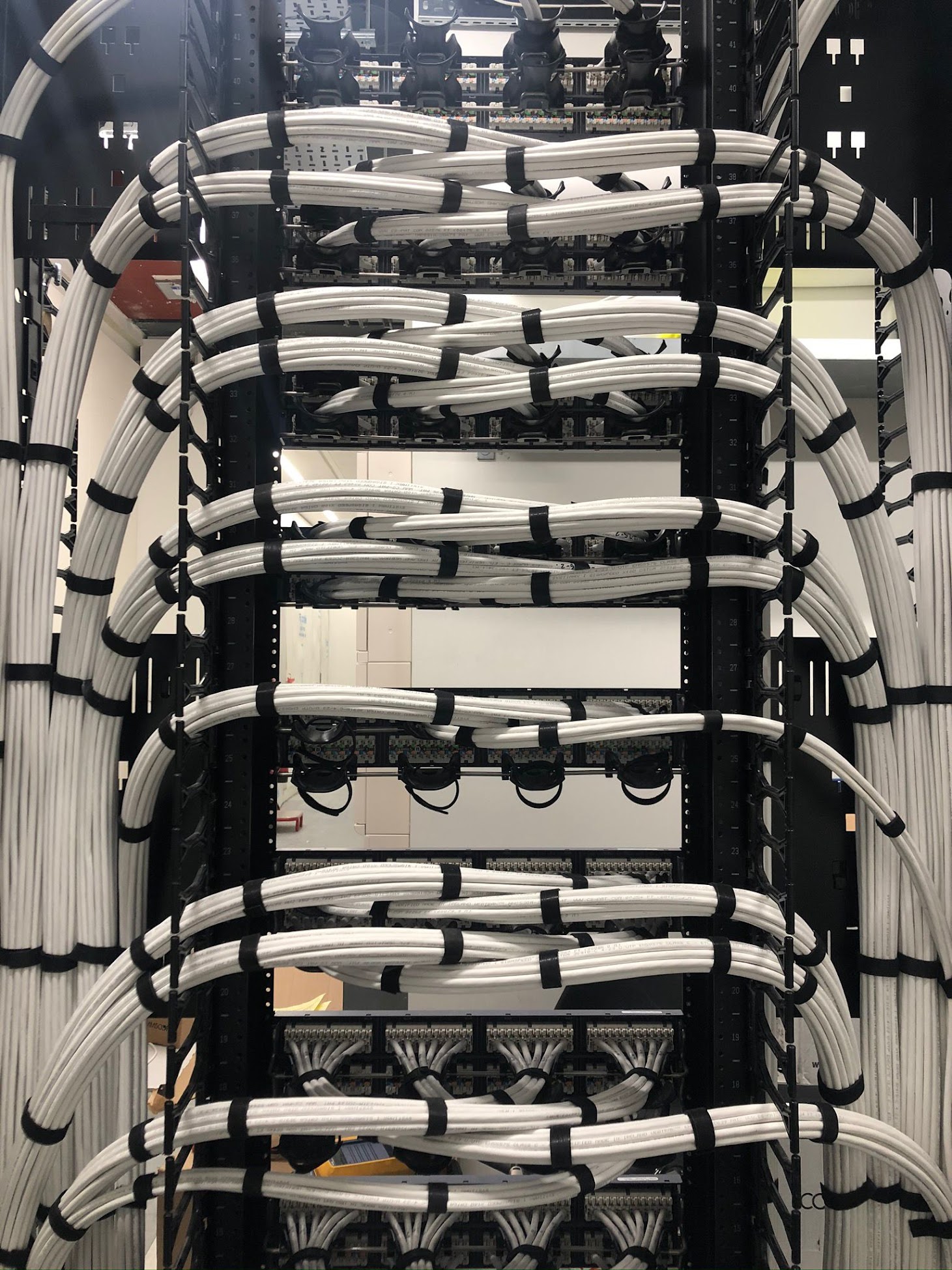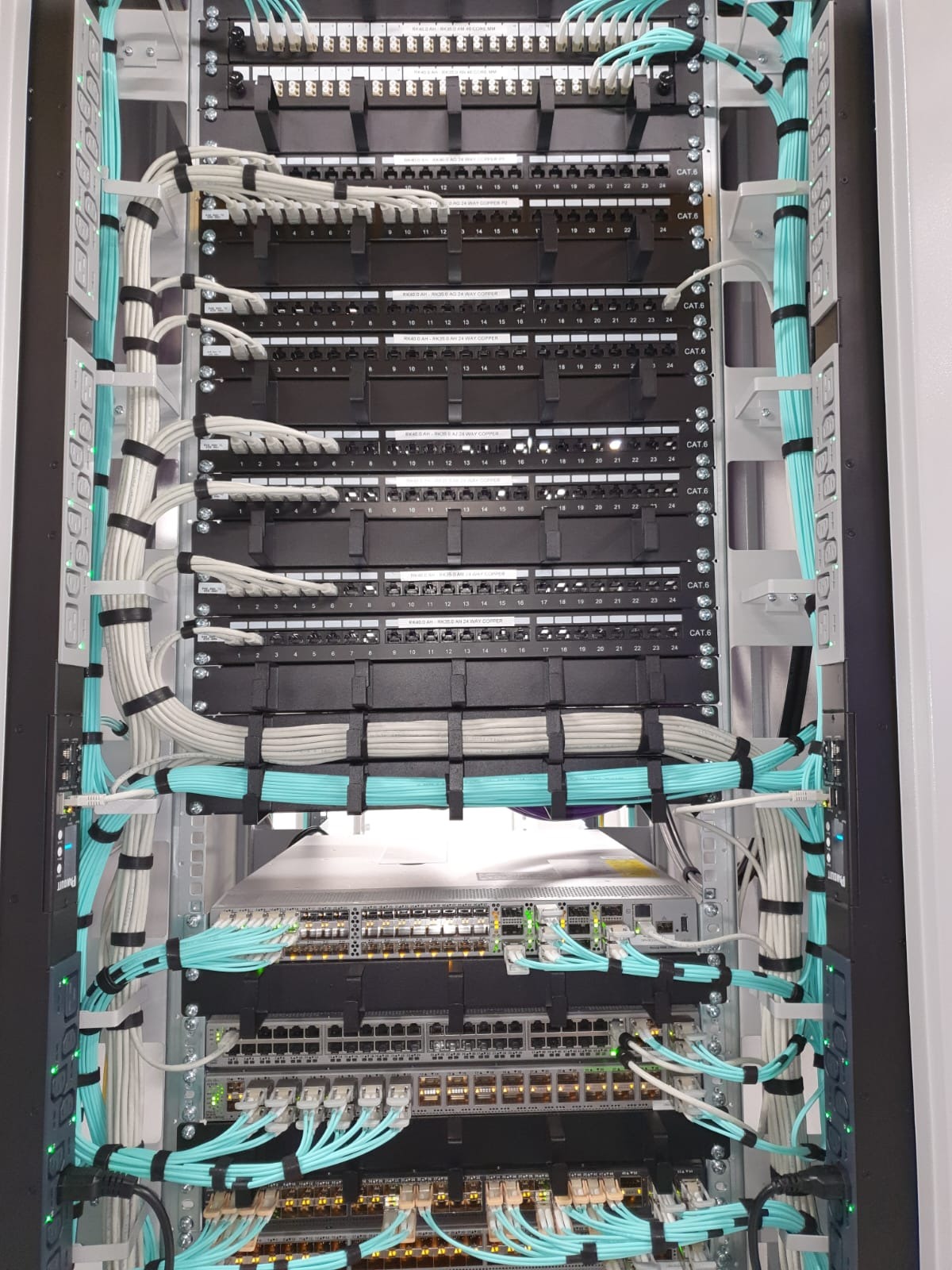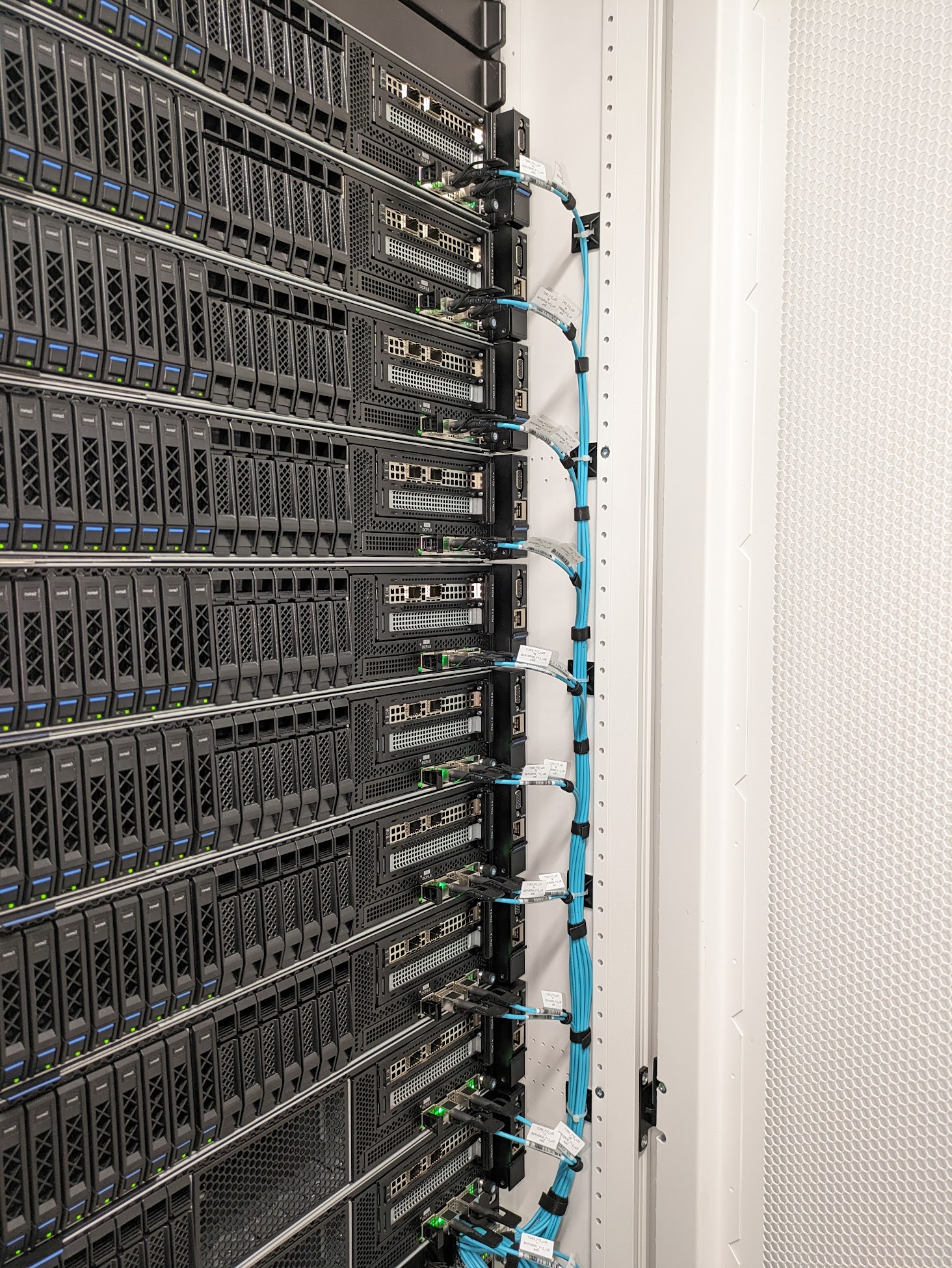

Servers refresh every three to five years, and switching turns over almost as fast. The cabling plant underneath them typically outlives four or five generations of everything above it. Get it wrong and you pay for it at every refresh.
Installed properly, it stays in place through refresh after refresh. Installed badly, it slows every change for years.
Designed for the 400G and 800G roadmap, not just today's switch order, so upgrades are a patch-lead change.
Labelled, tested, certified and recorded, so the plant can still be changed safely in year five.
Illustrative, with servers on a four-year refresh and switching on a five-year one.
Cat6A and OM4 are the workhorses of most enterprise halls. Distances shown are typical use, not absolute limits, and the higher speeds on multimode run shorter than the media itself does. We design the mix per row and per distance, not one media everywhere.
800G is shipping in hyperscale today, and 1.6T is on the roadmap. OM4 and OS2 fibre with MPO trunking carries you up the curve. Recabling a live hall to catch up later costs many times the difference.
Typical optic lane count and trunk connector at each step. Multimode stays in row where the distances are short, and the top steps and every long run go on singlemode.
Every moves-and-changes visit either maintains the standard or erodes it. We install to a standard that's easy to keep.
One team from the first walk of the space to the handover pack. No hand-offs between a designer, an installer and a tester.
Hover to pause, click a stage
A cabling plant outlives the people who install it. Three things are what make it safe to work on in year five, and all three are written into the design before anyone pulls a cable.
Designed and installed to the standards your auditors ask about, not loosely inspired by them.
Every link certified, with results recorded per link. Copper and fibre, no sampling.
A labelling scheme and as-builts that make year-five changes as safe as day-one ones.
Both ends of every cable, to one scheme that survives years of change and matches the as-builts.
Which hall on the site, so the label still reads on a campus.
Row B, cabinet 07, matching the grid on the floor plan.
The rack unit the patch panel sits in, counted from the bottom.
The port on that panel, numbered left to right, top row first.
The same rule at both ends: room, row and cabinet, unit, then port.
Example scheme. Yours is agreed during design and carried into the as-builts and patching schedules.
Channel and permanent link testing to TIA-568 and ISO/IEC 11801, certified on Fluke DSX.
OTDR testing and certification, with launch and receive cables fitted on every link.
Results recorded link by link and handed over in full. Copper and fibre, no sampling.
Test reports produced, defects remediated and the link retested before it is signed off.
Indicative planning figures for a typical hall. Every project is surveyed and scoped properly before we commit a programme.


For a hyperscale operator in EMEA, our engineers delivered the structured cabling for multiple halls back to back, with one design language, one labelling scheme and one standard.
Client identifiers withheld. Figures rounded.
Jane Street
Quadrature
UK Government (MoD)
Rackspace
Our engineers have designed and delivered structured cabling
for some of the largest data centre campuses in Europe.
In environments like that, one bad termination in ninety thousand gets found, because everything is tested. That discipline doesn't scale down badly. Whether it's a campus or a single row, the method is the same.
Media, topology and containment sized for the speeds you'll run in five years, not just today.
Pulled, dressed and terminated to method statements, with bend radius, separation and loading respected.
Copper and fibre, with results recorded per link. No sampling.
As-builts, patching schedules and labelling records, ready for your DCIM.
A floor plan, the rack layout and a rough link count are enough to start. We will come back with a survey plan, the design approach for media and containment, and an outline programme.
Data Centre Lifecycle Experts