
Jane Street
Quadrature
UK Government (MoD)
Rackspace
Scheduled data centre operations are live today in five cities across two continents, at a range of service tiers. These are the sites we run now, not the limit of where we can run.
The floor: racks, cabling, power, hardware and logistics, and the record of all of it.
We attend on request, with the runbook and the asset register already held and maintained between visits.
Fixed attendance days per site, working a managed ticket queue, with reactive cover in between.
Two or more days a week on site, plus 24/7 monitoring, and we own the incident through to closure.
Technicians on site every day across an extended two-shift pattern, on call overnight.
A dedicated crew on site around the clock, with spares held on site and a committed availability target.
Attendance patterns are illustrative. Days, hours and shift times are set per site. The fifteen-minute detection and ticketing promise applies at every tier.
| 01On-Call | 02Scheduled | 03Managed | 04Resident | 05Embedded | |
|---|---|---|---|---|---|
| Installs, moves, adds and changes | ● | ● | ● | ● | ● |
| Ticketing portal, managed queue and service reporting | ● | ● | ● | ● | ● |
| Goods receipt, shipping and RMA logistics | ○ | ● | ● | ● | ● |
| Asset register ownership and audit | ○ | ● | ● | ● | ● |
| Photographic evidence on every change | ○ | ● | ● | ● | ● |
| 24/7 infrastructure monitoring | ○ | ○ | ● | ● | ● |
| Incident ownership through to closure | ○ | ○ | ● | ● | ● |
| OEM and warranty escalation management | ○ | ○ | ● | ● | ● |
| Named service delivery manager and governance reporting | ○ | ○ | ● | ● | ● |
| Live DCIM portal for power, thermal and capacity | ○ | ○ | ○ | ● | ● |
| On-site spares pool held and managed | ○ | ○ | ○ | ● | ● |
| Firmware, BIOS and driver lifecycle | ○ | ○ | ○ | ● | ● |
| Environmental sensor mesh integrated into DCIM | ○ | ○ | ○ | ● | ● |
| Fabric health across InfiniBand and NVLink | ○ | ○ | ○ | ○ | ● |
| Node validation and return to service | ○ | ○ | ○ | ○ | ● |
| Full estate telemetry and two-way ITSM ticket sync | ○ | ○ | ○ | ○ | ● |
| Consignment spares, funded and stocked | ○ | ○ | ○ | ○ | ● |
| Committed fleet availability target | ○ | ○ | ○ | ○ | ● |
The fabric: monitoring, configuration, patching and change, on whatever is already in the racks.
We watch the fabric around the clock and raise the ticket the moment something breaks. Your team keeps the hands.
We hold the configuration, run the patching and execute standard changes on a managed queue.
Full change ownership and 24/7 remote engineering that resolves rather than escalates, plus a monthly walk of the estate.
Proactive capacity, performance and vulnerability management, a named service manager, and a visit every fortnight.
Weekly attendance, spares on site, quarterly failover testing and a committed availability target.
| 01Monitor | 02Manage | 03Managed Response | 04Assured | 05Critical | |
|---|---|---|---|---|---|
| 24/7 monitoring of device, interface and control-plane health | ● | ● | ● | ● | ● |
| P1 outage notified and ticketed within 15 minutes | ● | ● | ● | ● | ● |
| Fault triage and diagnosis | ● | ● | ● | ● | ● |
| Ticketing portal, managed queue and service reporting | ● | ● | ● | ● | ● |
| Configuration backup, restore and drift detection | ○ | ● | ● | ● | ● |
| Vendor TAC case ownership and escalation | ○ | ● | ● | ● | ● |
| Network OS patch management in scheduled windows | ○ | ● | ● | ● | ● |
| Standard change execution | ○ | ● | ● | ● | ● |
| Fabric controller operation and assurance | ○ | ● | ● | ● | ● |
| Normal change, RFC preparation and CAB representation | ○ | ○ | ● | ● | ● |
| 24/7 remote engineering support | ○ | ○ | ● | ● | ● |
| Incident ownership through to resolution | ○ | ○ | ● | ● | ● |
| Vendor advisory and vulnerability exposure tracking | ○ | ○ | ○ | ● | ● |
| Proactive capacity and performance management | ○ | ○ | ○ | ● | ● |
| Named service manager and quarterly service review | ○ | ○ | ○ | ● | ● |
| Live fabric telemetry streamed into your view | ○ | ○ | ○ | ● | ● |
| Two-way ticket sync into your ITSM over API | ○ | ○ | ○ | ○ | ● |
| Quarterly failover and resilience testing | ○ | ○ | ○ | ○ | ● |
| Consignment spares held on site | ○ | ○ | ○ | ○ | ● |
| Committed fabric availability target, where the tier supports it | ○ | ○ | ○ | ○ | ● |
Time to hands on, not time to fix. A response target that quietly pretends to be a fix target is a number nobody can hold, and everybody finds that out on the first bad night.
A response target is worthless without spares. Fifteen minutes to a rack you cannot fix is fifteen minutes. That is why on-site spares are inside the top tier rather than sold beside it.
We never run one-up. Lone working is banned on live electrical and liquid-cooled plant, and a single technician on shift means the second concurrent incident breaches by definition.
A P1 outage is detected, notified and ticketed within fifteen minutes. That applies at Copper exactly as it does at Platinum.
The tier changes what happens next, not how quickly you hear about it.
An alert on a switch and a body in the hall are the same ticket, on the same SLA clock, in the same portal.
Nobody gets to say the fault is on the other side of the patch panel. One contract, one service manager, one number.
One team badged, inducted and cleared for the site once, covering the floor and the fabric from the same shift.
Every tier includes the portal: raise and track tickets, interrogate the asset register and pull service reports on demand. From Gold we instrument the estate itself; at Platinum you also get two-way ticket sync into your own ITSM over API, so an event on the floor opens, updates and closes in your system without anyone typing.
Uptime, power, PUE, thermals and open work across the estate, at a glance. Live in the browser, not a screenshot.
Every ticket, its SLA clock and the full activity trail, including what the engineer did on the floor, and when.
Live rack elevations, occupancy, draw and inlet temperature per rack, with the GPU cluster mapped where it actually sits.
From choosing the hall to handing over a running estate. Priced as a project rather than a subscription, and the on-ramp to every tier.
Not every estate starts empty. Where the floor is already live, we do not rebuild it. We learn it, record it and take it on.
We walk the floor and check what is actually installed against what the records claim, photographed as we go.
Every asset, circuit and patch into the register, with power and thermal baselined so drift becomes measurable.
Monitoring and DCIM connected and tickets flowing, with your existing tooling either operated as it stands or migrated.
We assume the runbook, the escalation path and the SLA, and the estate is in steady-state operations.
Nine modules that sit alongside the tier tables. Every one of them can be added to any tier, and the mix can differ site by site.


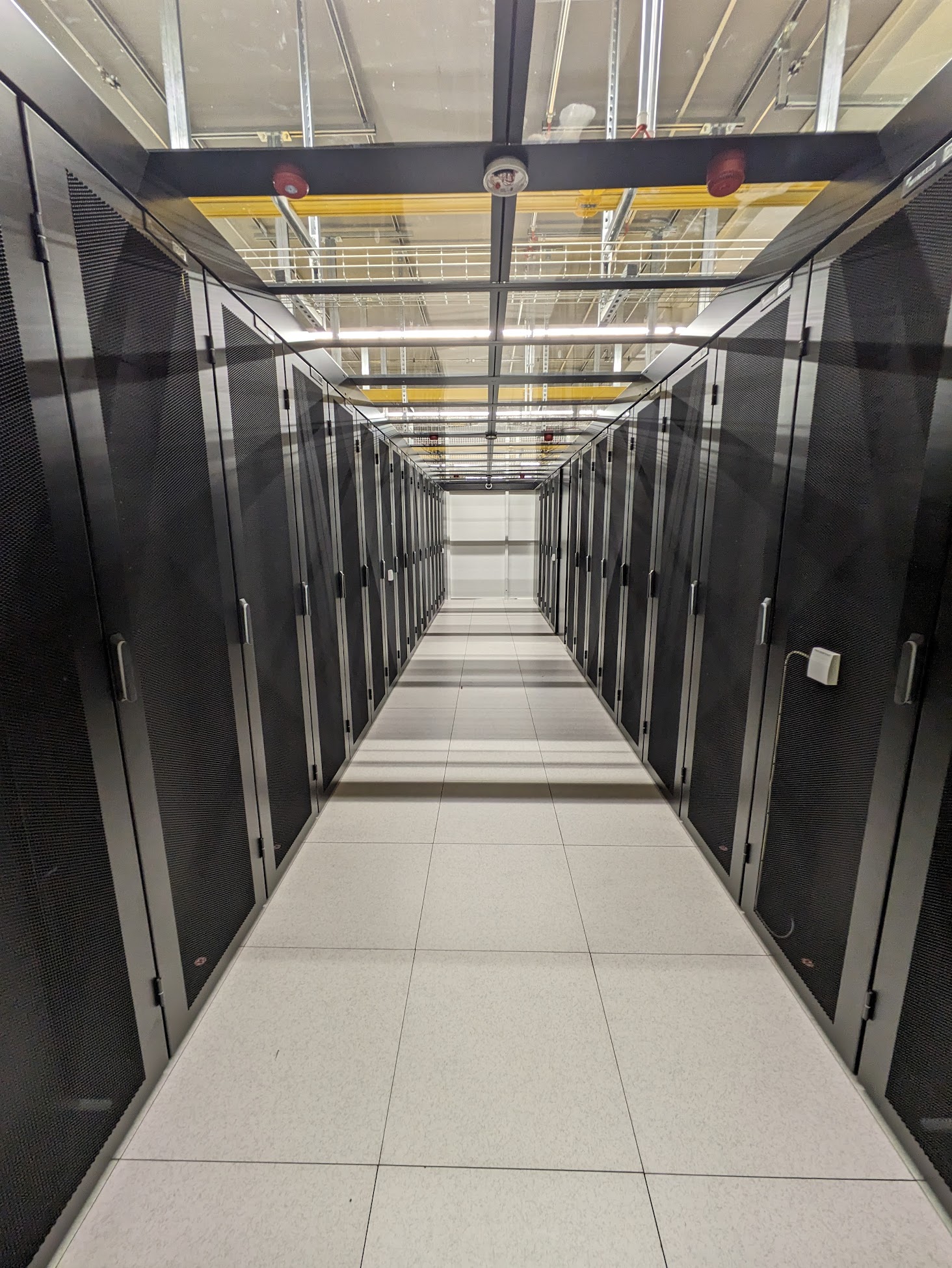
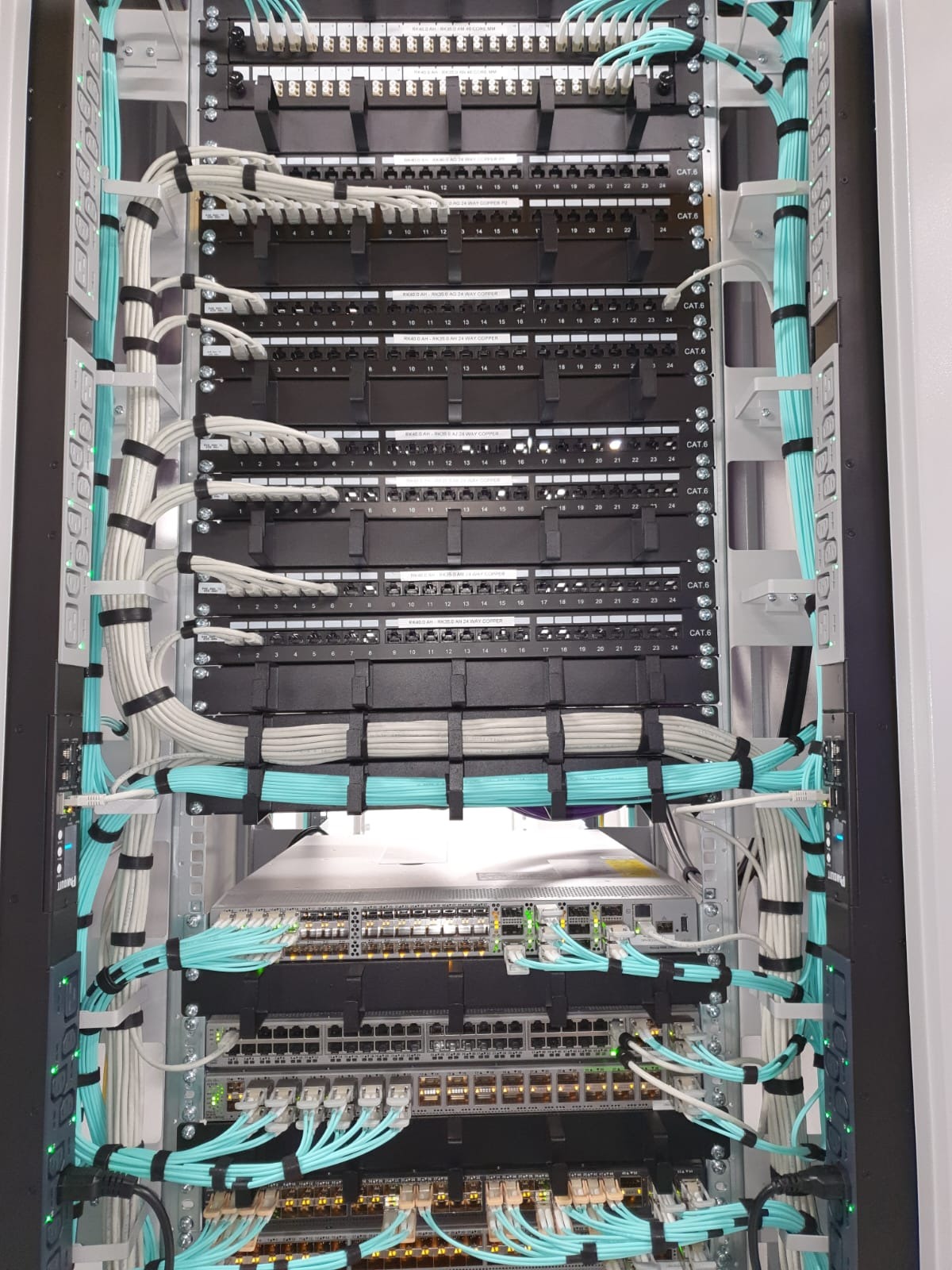
Our engineers, our projects. Not stock photography.
Design, fit-out, cabling and commissioning are the same business. Operations inherits a facility we already know, rather than one we are reading about.
The engineers on your floor are background-checked, badged and yours. You get the same faces, and they learn the estate.
Photographic evidence on every change, a maintained asset register, and reporting you can hand to your own auditors.
Most estates begin at Scheduled or Managed and step up as the deployment grows. Give us the footprint and the hours that matter, and we will come back with the tier that fits.
Data Centre Lifecycle Experts